Medieval Fragments
(9th-11th centuries)
Benjamin Bagby: voice, Anglo-Saxon harp
Norbert Rodenkirchen: tansverse flutes (wood and bone)
Created for the Baroque Music Festival in Kyiv, November 2026
Sequentia performs songs and fragments of medieval memories, bringing us into a world much like our own, filled with confusion and hope, burning dynamism and cold memory, visions of both the past and the future. Anonymous songs in Old English and Old German speak again after a silence of a thousand years and more, along with the sounds of an ancient harp and flutes shaped from wood and bone.
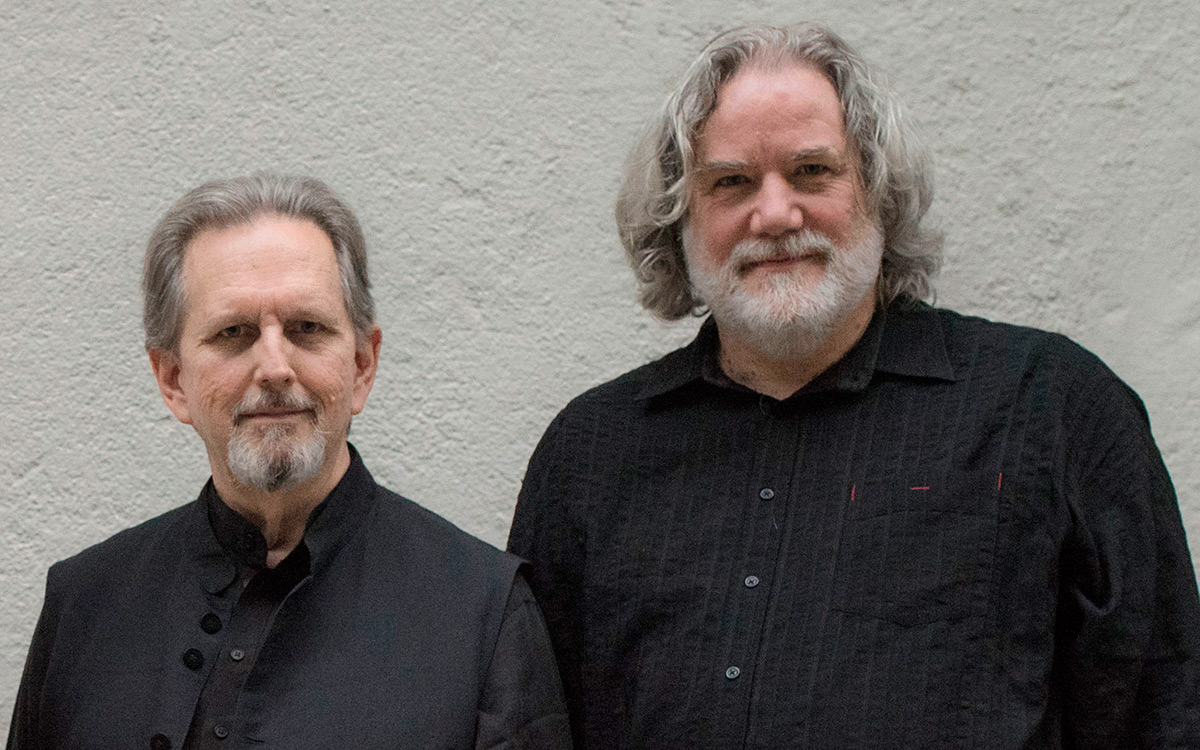
Norbert Rodenkirchen, Benjamin Bagby
Unsar trohtin hat farsalt
The flute remembers an old prayer to Saint Peter, resounding in a chapel filled with pilgrims.
Sin taq piqueme
This earliest surviving text in Old German is known as 'Muspilli', a mysterious northern word which indicates the end of the world by fire, the final battle between good and evil. It describes the terrifying vision of the Last Judgement for all beings, and urges us to put our house in order.
Wrætlic is ðes weal-stan
An Old English poem which describes a ruined landscape, stones abandoned centuries ago but still speaking eloquently of a vanished world (in this case, the ancient Roman ruins of the English city of Bath). A reflection on time and fate.
Ardua spes mundi
Instrumental version of a song by Ratpert of St Gall, 9th century
Wyrm com snican
A charm against poison and snakes, magic words to be spoken in a time of danger, and an incantation for seeking refuge and healing.
Gaude coelestis sponsa
Instrumental piece based on Frankish sequence melodies from St Gall 9th century
The sequence melodies dating from the time of Notker, monk of St Gall were sometimes written in early manuscripts as textless sequelae and there many indications pointing to an instrumental use of these archaic tunes. The exact pitches of these melodies can be determined by consulting later sources which are consistent over the centuries and give us a rather clear image of the melodic lines. In this ex tempore interlude Norbert Rodenkirchen explores the evident relationship amongst various early medieval sequelae. The central tune here is Adducentur, also known as "Gaude coelestis sponsa".
Hwæthere ic me ealles
A fragment from Anglo-Saxon times, this lament of an exile calls to mind the many lost souls who have wandered the earth, driven from their homes and searching for a safe place to live, remembering the friends lost while searching for a boat to safety, without any gold to pay the passage to safety, enduring fate.
Fistula
Instrumental version of another Notker sequela, of which many have instrumental titles, like here mentioning the name of the antique traverse flute.
St Gall 9th century
Þær wæs swylcra fela in ðam eorðhuse
The Anglo-Saxon elegy called 'The Song of the Lone Survivor' (from the Beowulf epic).
In this elegy from the Beowulf epic, we learn that an entire unnamed northern tribe has been decimated by war, with only one man left alive, the lone survivor. He carries the people's treasure, weapons (and even a harp) into a nearby barrow, returning them to their origins as a final gesture of remembrance, singing to the earth itself before he, too, is carried off by a lonely death.